Salome was a biblical Jewish princess. She was the daughter of Herod II, King of Judaea, and Herodias, and the stepdaughter of Herod Antipas. Salome is one of the first examples of the ‘Femme Fatale’ archetype.
Antipas divorced his first wife, the daughter of the king of Nabatea, in order to marry Herodias, who had previously married his brother. According to the New Testament, the reason why Antipas arrested the prophet and sentenced him to death is that John the Baptist cursed this marriage.
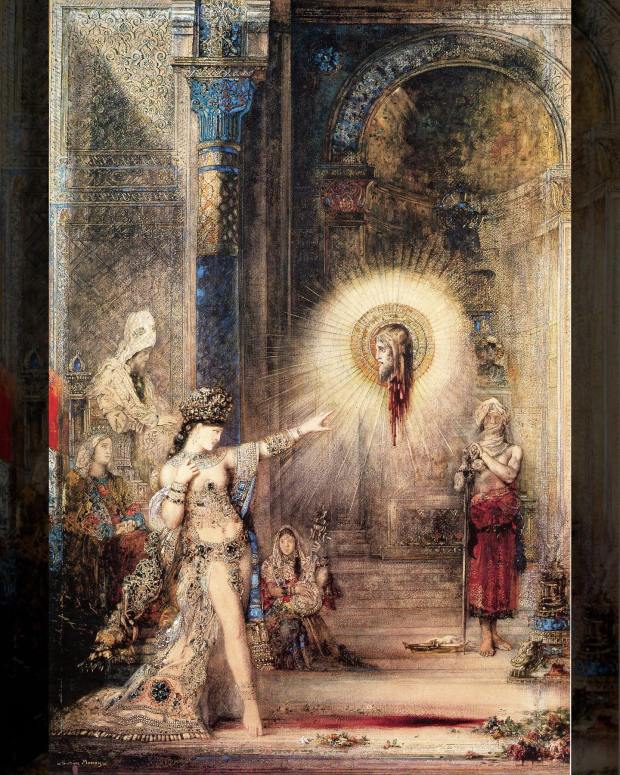
According to the story, King Herod asked his stepdaughter Salome to dance at his birthday celebration. He is so moved by this dance that he promises to do anything Salome wants. Salome hesitates and consults her mother, Herodias. Herodias, unable to forget what John had said about their marriage, said that his daughter Salome should ask the king to bring the head of John the Baptist on a platter. Then John is killed and his head is brought to Salome on a silver platter.
Many years later…
In 1882, Friedrick Nietzsche fell in love at first sight with a lady he had just met in Rome. Lou Andreas-Salome, was one of the world’s first female psychoanalysts, and she befriended and influenced a variety of distinguished thinkers with her intellectual interests. Nietzsche proposed to Salome, who was immediately impressed, but Salome did not intend to marry. Nietzsche was rejected.
Symbols: One of the earliest examples of an attractive, demanding woman who used her femininity to make men do whatever she wanted; the name of the other was mentioned in love rumors with famous names such as Tolstoy, Freud, Nietzsche, Rilke, Paul Ree; Freud described her as a “terribly intelligent” and it was believed that he drove Nietzsche into insanity. Isn’t it interesting that these two women have the same name?
Jung included the characters John and Salome in his Red Book. Of course, Jung’s book is a sea of symbols and archetypes. But it is a known fact that Jung was influenced by the works of Nietzsche, especially by Thus Spoke Zarathustra. Maybe he was inspired by the story of Nietzsche and Salome while he was imagining these two characters.
You can write your thoughts about Salome and John symbols in the comments section.
Love, Vesta.
 Vesta Ateşi